A Regulation 7 first aid kit is a supplier's name for a standard workplace first aid box with extra supplies for cleaning up blood and body fluids.
Key points
Clearing up the name
A Regulation 7 first aid kit is not defined anywhere in South African law. The name is used by suppliers and safety professionals for a larger kit.
The legal minimum for a workplace first aid box comes from General Safety Regulation 3, under the Occupational Health and Safety Act. Proposed changes to those rules were discussed in draft form but never came into effect, yet the "Regulation 7" label stuck.
Today it usually means a kit that holds everything on the Regulation 3 list, plus equipment for dealing safely with blood and other body fluids.
Contents
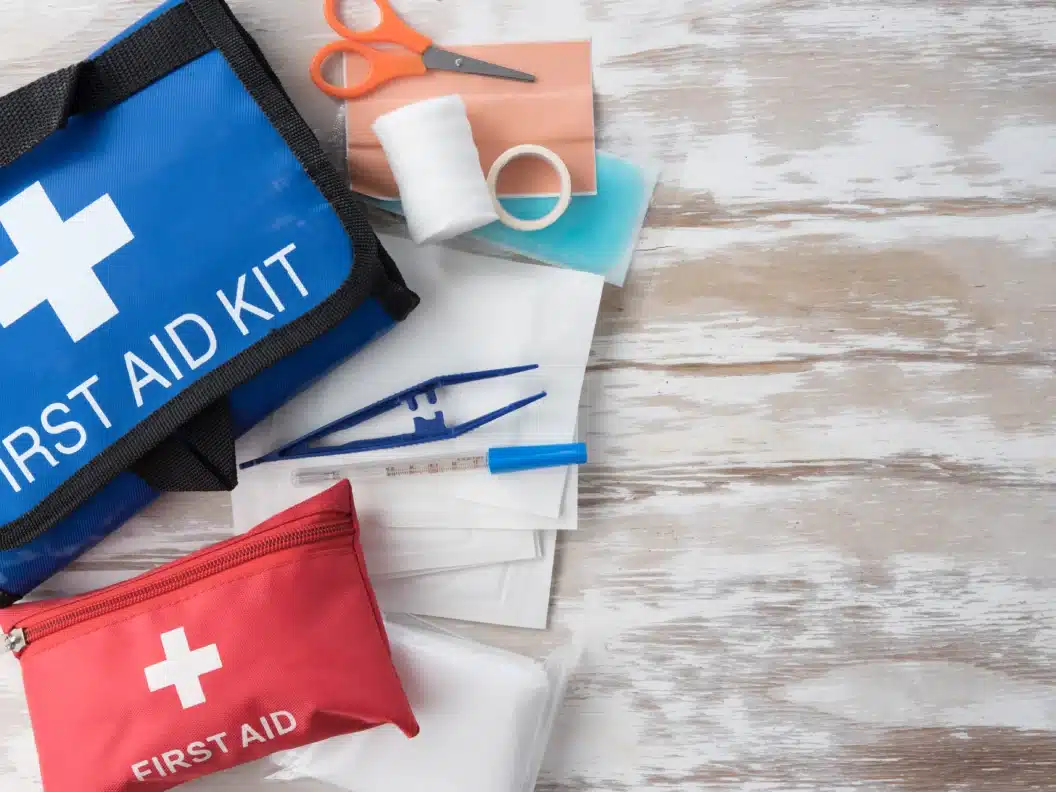
The contents of a Regulation 7 first aid kit vary from one supplier to the next, so read the list before you buy. A typical kit has two parts.
| Part of the kit | What it usually includes |
|---|---|
| The standard first aid items | Wound cleaner, swabs, gauze, bandages, dressings, splints, scissors, forceps, safety pins, gloves and CPR mouthpieces, as listed in the Regulation 3 Annexure |
| Absorbent material | Granules or powder that soak up a spill so it can be scooped away |
| Disinfectant | To clean the surface once the spill has been removed |
| Disposal bags | Sealable bags, often marked for biohazard waste, for used materials |
| Extra protection | More disposable gloves, and often an apron or scoop |
For the exact legal list, see our guide to the Regulation 3 first aid kit.
Who needs one
Any employer can choose a Regulation 7 first aid kit. It makes the most sense where cuts, bleeding or other spills happen more often.
Knives, slicers and hot surfaces make cuts common, and spills must be cleaned without contaminating food areas.
Nosebleeds and grazed knees are daily events, and staff need a safe way to clean up afterwards.
Sharp tools and heavy materials raise the chance of deep cuts on site.
Anywhere people are treated or exercise hard, body fluids are more likely to need cleaning up.

Safe practice
The extra items in a Regulation 7 first aid kit only protect people if they are used in the right order.
01
Put on disposable gloves, and an apron if the spill is large.
02
Cover it with absorbent granules and wait for them to soak it up.
03
Scoop the material into a disposal bag, then disinfect the surface.
04
Seal the bag, remove gloves carefully and wash your hands thoroughly.
Training first aiders or covering a site? Speak to Ralmed on 086 1725 633.
The legal side
No. Rather than a Regulation 7 first aid kit, the law requires a first aid box that meets General Safety Regulation 3 once more than five employees work at a workplace, stocked for the risks of the work.
A Regulation 7 first aid kit can be a sensible way to meet that duty where spills are likely, because the regulation expects employers to add equipment that suits their risks. What matters to an inspector is that the box is complete, reachable and checked, and that trained first aiders are available.
The official regulations are published by the Department of Employment and Labour. Ralmed runs accredited first aid courses for the people who use these kits.
Questions
Call Ralmed on 086 1725 633 for advice, but no specific law requires a Regulation 7 first aid kit. The legal requirement is a first aid box meeting General Safety Regulation 3 wherever more than five employees work. A larger kit is a choice some employers make for higher-risk sites, and we can help you decide what suits your workplace.
The name comes from proposed changes to the first aid rules that were drafted but never came into force. Suppliers kept using the label for kits with extra spill equipment, and it has become a common industry term rather than a legal one.
A Regulation 3 kit holds the minimum items listed in the regulation's Annexure. A kit sold as Regulation 7 holds the same items plus supplies for cleaning up blood and body fluids, such as absorbent granules, disinfectant and disposal bags.
Not automatically. The right kit is the one that matches the injuries likely at your workplace, is fully stocked and sits where people can reach it. A larger kit that nobody checks is less use than a complete standard kit with a trained first aider nearby.
Ideally a trained first aider or another person who has been shown how to clean up blood and body fluids safely. They should wear gloves, follow the steps in order and dispose of used materials in a sealed bag. Afterwards, restock the spill items so the kit is ready for the next time.
Monthly is common practice, and after any incident where the kit was used. Check every item against the supplier's list, replace used or expired items, and keep a signed record. Spill supplies such as disinfectant can expire, so check their dates too.
Yes. Once more than ten employees work at a workplace, the employer needs at least one certified first aider for every group of up to 50 employees, or up to 100 in shops and offices. The kit supports the first aider; it does not replace them.
Keep it where it can be reached easily from the area it serves, such as near a workshop or a site office, and away from heat and damp. Mark the spot with a clear first aid sign, and make sure every shift knows where it is and who the trained first aiders are.
Yes. Ralmed runs HWSETA and QCTO-accredited First Aid courses from Level 1 to Level 3, taught by working paramedics at your workplace anywhere in South Africa. Learners practise with dressings, bandages and gloves on realistic scenarios, so the contents of the kit become useful when an incident happens. Call 086 1725 633 to book.
Related
Read about the Regulation 3 first aid kit, or see our occupational health services and accredited training. All our guides are on the resources page.
We train first aiders and provide medical cover for workplaces across Gauteng, with training available nationwide. Call us to discuss your site. For advice on a Regulation 7 first aid kit and the people who use it, call 086 1725 633.

Head office based in Sandton, Johannesburg, Ralmed established in 2013, specializes in comprehensive medical and occupational health services in South Africa, dedicated to compassionate, cost-effective care. Call Ralmed Emergency Medical Services today.