
First aid Level 1 is the starting point for every workplace first aider. Delegates learn to take charge of an emergency scene, give CPR, use a defibrillator and treat the injuries that actually happen at work — then prove it in a practical assessment. Accredited through HWSETA and the QCTO, and run at your premises anywhere in South Africa.
At a glance
The course
First aid Level 1 teaches someone with no first aid background to act in the first few minutes of an emergency — the minutes that decide the outcome long before an ambulance arrives. Delegates learn to make a scene safe, work out what is wrong with a casualty, and start treatment in the right order.
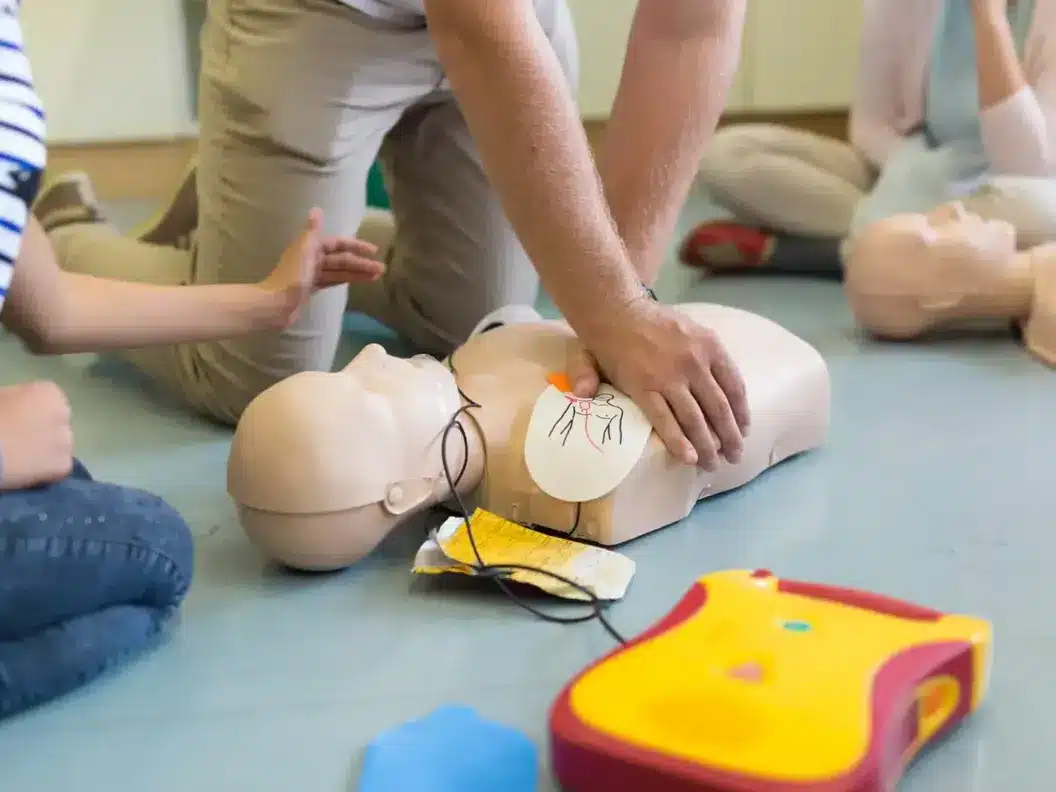
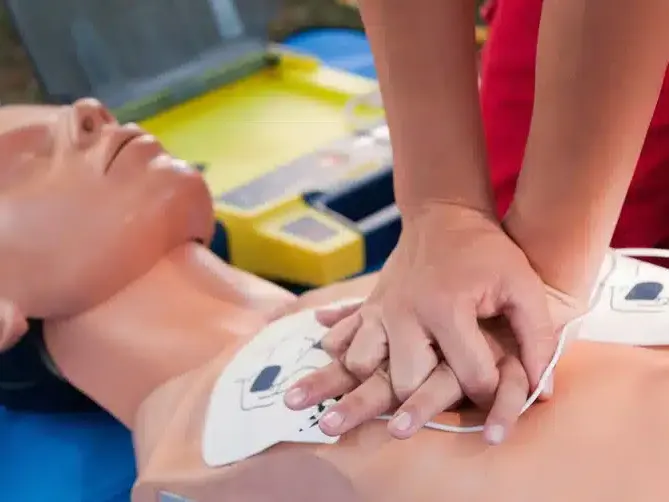
The practical core is life support: CPR on an adult, using an automated external defibrillator, clearing a blocked airway, controlling bleeding, and putting an unconscious casualty who is breathing into the recovery position. All of it is practised on mannequins until it stops feeling like a decision.
Around that sit the injuries and illnesses that fill a workplace incident book — burns, fractures, sprains, eye injuries, shock, seizures, diabetic emergencies and asthma attacks — along with what belongs in the first aid box and how to record what was done.
Who it is for
Level 1 is the default choice for a workplace first aider, and the level most employers book to meet their duty under the Occupational Health and Safety Act.
The people named on the notice board as the site's first aiders. Level 1 gives them the certificate the Act expects and the skills to back it up.
Lower-risk workplaces where the likely emergencies are cardiac events, choking, falls and everyday wounds rather than machinery injuries.
People coming to first aid for the first time, and certificate holders whose three years are nearly up and who need to requalify before cover lapses.
Staff who are often first on the scene because of where they sit or what they do, even when first aid is not their job title.
The levels
South Africa uses three first aid levels and they build on each other. Level 1 is the foundation; the higher levels add scope for higher-risk sites.
| Level | Who it suits | What it adds |
|---|---|---|
| First aid Level 1 | Every workplace first aider, and anyone new to first aid | Scene management, CPR and defibrillator use, bleeding, burns, fractures, shock and the common medical emergencies |
| First aid Level 2 | First aiders in higher-risk workplaces, and Level 1 holders going further | The Level 1 skills in more depth, with more on medical emergencies, heat and cold injuries and moving a casualty safely |
| First aid Level 3 | Senior first aiders, safety officers, and remote or high-risk sites | Advanced first aid, airway and oxygen skills, managing more than one casualty and leading the response |
How it works
01
Give us the number of delegates, the kind of work they do and where they are. Group bookings and individual places both work.
02
We run the course at your premises anywhere in South Africa, or in our training room at Kelvin View in Sandton.
03
Delegates spend most of the course on their feet — on mannequins, on each other, and in scenarios built around their own workplace.
04
Every delegate is assessed practically. Those who meet the standard receive an accredited certificate.
Need your first aiders trained to Level 1? Tell us how many, and where.
Accredited. Our first aid training is accredited through HWSETA and the QCTO, so the certificate holds up when an inspector asks for it.
Taught by working paramedics. Ralmed runs an ambulance service. The people teaching your staff spend the rest of the week on real calls.
At your premises. We bring the course to your site anywhere in South Africa, so you lose far less time than sending people away.
Practice, not slides. Most of the course is hands-on. Delegates leave having done the skills rather than having watched them.
Cost
Level 1 is quoted per group rather than off a fixed list, because the cost moves with the things below. Tell us the numbers and we will put a written quote in front of you.
These are the things that set the price:
For a quote, tell us how many people need Level 1, where they are and when you want it done. Call 086 1725 633 or send a WhatsApp.
Your options
Online first aid courses are easy to find and cheap. Here is how they compare with an accredited Level 1 for someone who has to hold a valid workplace certificate.
| Option | How it is taught | Suits | Things to weigh up |
|---|---|---|---|
| Accredited Level 1, in person | Hands-on practice with an assessor, on mannequins and on each other | Workplace first aiders who must hold a valid certificate | Takes the team off the floor for the course |
| Online first aid course | Videos and quizzes, with no practical assessment | General awareness, or refreshing theory between courses | Nobody checks the practical skills, so it may not satisfy an inspector |
| Informal in-house training | A colleague passes on what they know | Basic awareness between formal courses | No certificate, and the quality depends entirely on the colleague |
Get started
Send the number of delegates, the level and where they are, and we will come back with a date and a written quote.
Training room
89 Impala Road, Kelvin View, Sandton
Or we come to your premises.
Our first aid training runs anywhere in South Africa, at the client's own premises. Most Level 1 groups are trained on site, in a room the employer already has.
See all our accredited medical training, or step up to Level 2 and Level 3.
Questions
Level 1 covers emergency scene management, CPR and defibrillator use, choking, bleeding and wound care, shock, burns, fractures, and the common medical emergencies such as seizures, diabetic emergencies and asthma. It also covers the first aid box and how to record an incident.
Level 1 is the shortest of the three levels. We confirm the exact schedule when you book, because we build the day around your shifts and the size of the group.
No. Level 1 is the starting point and assumes no first aid background at all. Anyone already holding a valid Level 1 who wants more scope should look at Level 2.
Under the General Safety Regulations of the Occupational Health and Safety Act, a workplace with more than ten employees must have at least one qualified first aider for every fifty employees, along with a stocked first aid box. Shift patterns matter: cover is needed whenever people are working.
A workplace first aid certificate is generally valid for three years. Diarise the requalification before it lapses, because an expired certificate leaves the name on your notice board without valid cover behind it.
Yes, and most Level 1 groups are trained that way. We bring the mannequins and the training equipment to your site anywhere in South Africa; you provide a room and the people.
Yes. First aid is a practical skill, so delegates are assessed doing it — CPR on a mannequin, bandaging, and working through a scenario — not by writing a test alone.
Yes. Ralmed's first aid training is accredited through the Health and Welfare SETA and the QCTO, and delegates who meet the standard receive an accredited certificate.
Both. Most Level 1 courses are booked by an employer for a group, but individual places are available. Call and we will put you on the next suitable course.
Yes. CPR and the use of an automated external defibrillator are core to Level 1, and both are practised on mannequins until every delegate can do them confidently.
Related training
Step up to first aid Level 2 or Level 3, add fire fighting training for the same team, or see everything on our medical training page.
Tell us how many people need Level 1, where they are and when suits, and we will send a date and a written quote.


Head office based in Sandton, Johannesburg, Ralmed established in 2013, specializes in comprehensive medical and occupational health services in South Africa, dedicated to compassionate, cost-effective care. Call Ralmed Emergency Medical Services today.